

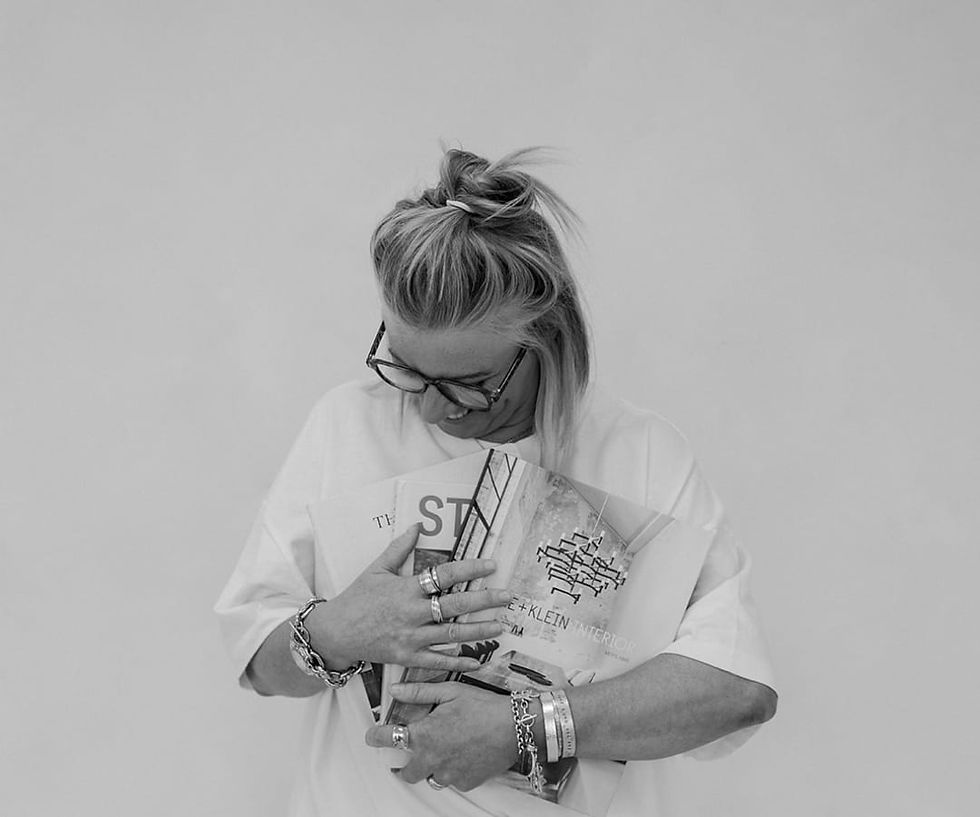
June Glackin - The evolution of Understanding.
June Glackin - The evolution of Understanding.
Edition 02.
Wanted. The need to feel welcome.
AN EDITORS LETTER FROM JUNE GLACKIN
THERE IS A DIFFERENCE BETWEEN BEING INVITED & FEELING WELCOME.
We know it because we’ve felt it.
That moment of walking into a room and wondering where to go. Who to speak to. Whether everybody else knows each other. Whether, somehow, everyone else received a set of instructions that you didn’t.
Do I belong here?
I know that feeling. I was her. I am her.
And perhaps that is why this matters to me.
Because being invited gets you into the room.
Feeling wanted is what allows you to belong in it.
q


THE INVITATION
An invitation can be a beautiful thing in the post. A carefully written email. Or simply somebody saying, I’d really love you to be there. The format doesn’t really matter.
The intention does.
Because we’re not inviting people into rooms simply to fill them.
And we shouldn’t be inviting somebody purely because of their name, their title, their position or what having them there might say about the room.
Why them?
Why do we want that person there?
What will they bring to the room? And just as importantly, what might being in that room bring to them?
Of course, make the invitation beautiful if it should be beautiful. Make it feel considered. Make somebody smile when they receive it.
But before any of that, make sure it means something. You’re not invited because we need somebody in the room.
You’re invited because we want you in it.
READING THE ROOM.
I’ve always watched people.
I’m intrigued by them. How they behave. How they connect. How differently two people can experience exactly the same room.
Years as cabin crew probably heightened that. Twenty years of events certainly has.
I scan rooms. I watch body language. Who is talking? Who isn’t? Who has found their people? Who is still finding their place?
BECAUSE YOU CAN CREATE ONE EXPERIENCE, IN ONE ROOM, AT EXACTLY THE SAME MOMENT, AND EVERY PERSON WITHIN IT WILL EXPERIENCE IT DIFFERENTLY.
That matters to me.
Somebody standing on their own doesn’t mean they’re lonely. They may be perfectly happy in their own company, taking everything in, with absolutely no desire to be rescued.
Likewise, you can look at somebody surrounded by people and they have never looked more alone.
So reading people isn't about deciding what somebody needs from a distance. It is about noticing enough to respond appropriately.
An introduction when it would help. A conversation when somebody needs one. A little reassurance. Space when space is exactly what they want.
Because making somebody feel welcome isn't about treating everybody in the room the same.
It is understanding that they aren't.
You can design the room for everyone.
But you have to understand the people within it as individuals.
That is the difference between somebody simply being there and somebody feeling that there is a place for them there.

YOU CAN DESIGN THE ROOM FOR EVERYONE. BUT YOU HAVE TO UNDERSTAND THE PEOPLE WITHIN IT AS INDIVIDUALS.
q
THE AESTHETIC OF THE SOUL.
I care enormously about how things look.
I always have.
The flowers. The table. The paper. The lighting.
The way a room comes together and the hundreds of details within it.
But there is another aesthetic that matters just as much to me.
The aesthetic of the soul.
What does the room feel like?
How do the people within it feel?
Because we can create something breathtakingly beautiful, but if people don’t feel comfortable within it, if they don’t connect, if they don’t feel welcomed or able to be themselves, then for me, something is missing.
And then there's what they take away with them.
Not simply the goodie bag or the gift in their hand.
The conversation. The introduction that may become something more. A connection they didn’t have when they arrived. The sense of belonging. Perhaps even a little more belief in themselves because of the room they found themselves in and the people they met there.
Those things have value too.
Long after the flowers have gone and the room has been cleared, they can remain.
IT'S AN AESTHETIC THAT CAN'T ALWAYS BE SEEN. CAN'T ALWAYS BE PHOTOGRAPHED. BUT IT CAN ALWAYS BE FELT.
q


EXPENDITURE DOESN'T ALWAYS EQUAL GREATER EMOTIONAL IMPACT.
I work in a world where extraordinary amounts of money can be spent creating extraordinary things.
A floral budget alone can (and has been) the equivalent of what somebody spent on their first home.
And I love that world.
But expenditure doesn’t equal greater emotional impact. They are not the same thing. Both can have volume, but on very different levels.
One is financial. The other is felt.
Of course investment can give us greater possibilities. Greater access. Exceptional craftsmanship. The opportunity to create something genuinely extraordinary. But spending more does not automatically mean feeling more.
That part cannot simply be bought.
It has to be created.
Let
it
flow.
There will always be an Eager Annie, timeline in hand, who knows it said three o’clock and is now very aware that it is ten past.
Sorry, Annie!
But what is happening in the room?
Perhaps two people who haven’t seen each other for years have found one another. Conversations are flowing. People are connecting. The room is exactly where it needs to be, even if the timeline says otherwise.
I’m not going to shimmy people along simply because we planned something else for ten minutes ago.
There are the moments we plan, and then there are the moments happening right in front of us.
Experience is knowing which one matters more.
I can find those ten minutes again. Pull a little time back here.
Gently move something there. Bring everything back to where it needs to be without the room ever knowing.
That, to me, is owning the space.
Not controlling every minute of it.
Knowing when to move it forward and when to leave it alone.
Because sometimes the best thing you can do for a moment is let people stay in it.

DOES PERFECT EVEN EXIST?
I once blew up two hoovers trying to clean a dirty, damp marquee carpet before a couple arrived.
Henry first.
Then his friend Henrietta.
People had been walking mud through the marquee and what should have been an impeccable setting was anything but. So there I was, trying to rectify it, while poor Henry and Henrietta made their way towards the gates of electric heaven.
The couple knew none of this. When they arrived, they saw exactly what they needed to see: an impeccable, impactful setting waiting for them. Not the mud. Not the panic.
(And certainly not the two Hoovers that had given their lives for the cause.)
It still makes me laugh, but there is something in it.
Perfect doesn’t mean everything went perfectly.
Things happen. They always will.
The expertise is in knowing what happens next.
What needs fixing.
What can be embraced.
And what should never become somebody else’s experience.
Sometimes we embrace the moment.
Sometimes we quietly fix it.
And sometimes we bury Henry and Henrietta two fields away and carry on.
Who wrote the rule book? Who wrote the rules?
And why are we still following some of them?
I spent years as cabin crew. I understand rules.
Some exist for very good reasons. Safety. Protection. Knowing exactly what happens when something doesn’t go to plan.
You don’t question those simply because you fancy doing things differently.
But then there are rules that feel as though they belong to old seasons.
Things we continue to do because that’s how they’ve always been done. Traditions we’ve inherited without ever really asking whether they still serve the people in the room.
WHO WROTE THE RULES THOUGH?
Or hearing someone tell me... 'It's what we've always done.'
Those are the ones I question.
Not for the sake of being different. That has never interested me.
But because people change. The way we live changes.
The way we gather, celebrate, work and connect changes too.
So surely the experiences we create should be allowed to change
with us?
If a tradition matters, keep it.
If a protocol has purpose, respect it.
But if the only answer is because that’s what you do...
I’m probably going to ask why.
DISCRETION, TO ME IS
RESPECT
.
Discretion is one of those words I hear a lot at the moment, particularly in the luxury world.
But discretion for discretion’s sake is just a word. For me, it is about respect.
And naturally, I mean discretion in its truest sense too. Privacy. Confidentiality. NDAs when they are needed. Being trusted in somebody’s home, their space, their family or their world and understanding that access doesn’t give me permission to share it.
That should almost go without saying.
I just think discretion goes further.
Anybody can want or need it, for any number of reasons.
But there are also people in this lovely universe of a world we live in who, on paper, appear to have more.
And sometimes, with more comes more eyes. More interest. More expectation.
The simple act of walking into a room and just being can become something they rarely get to experience.
Sometimes discretion means no photographs. Sometimes it means preparing a room so somebody’s arrival doesn’t suddenly change it.
Sometimes it is understanding that the person everybody knows for what they are would quite like, for a few hours, to be known for who they are.
To talk. To laugh. To belong. To simply be part of the room.
That, to me, is discretion.
Protecting what needs protecting, absolutely.
But also understanding somebody well enough to give them the space to feel welcome, wanted and entirely themselves.
W A N T E D.
I think, when I strip all of this back, it is actually very simple.
We all want to feel wanted.
Not just invited because our name was on a list. Not just welcomed because somebody was standing at the door.
W A N T E D. Like somebody thought about us being there.
Like there was a place for us in the room. Like it mattered that we came
.
Because people change. Life changes. Rooms change. We ebb and flow like the clouds move across the sky. And none of us really knows what somebody has carried with them before they arrive.
So talk to them. Listen to them. Notice them.
Let them stay in the moment when the moment matters more than the schedule.
LET THEM BE EXACTLY WHO THEY TRULY ARE IN THE ROOM, RATHER THAN WHO THE
ROOM EXPECTS THEM TO BE.
Make beautiful things. Of course I will always want to make beautiful things.
But make something they can feel.
Because when the flowers have gone, the lights are off, the glasses are cleared and everybody has gone home, they may not remember every detail we spent months thinking about.
But they will remember the connection. The conversation. The way they felt.
People will always remember the way you made them feel.
And perhaps that is all W A N T E D really is.
To be seen. To be heard. To know that your presence mattered.
I see the unseen because I want people to feel seen.
I hear the unspoken because I want people to feel heard.
And I care about all of it because I care about people.
That’s it. That’s where every experience begins for me.
Because I care.